“In order to assume culture we must assume collectivity. Yet usually we assume collectivity on the basis of culture.”
Gayatri Chakravorty Spivak in “Death of a Discipline”
escape from a bankrupt state
Collecting, sharing and pointing to material that makes me click.
Category Archives: Quotes
“Creativity is just connecting things. When you ask creative people how they did something, they feel a little guilty because they didin’t really do it, they just saw something. It seems obvious to them after a while. That’s because they were able to connect experiences they’ve had and synthesize new things.”
Steve Jobs
Steve Jobs Quote
“Nature has no outline, but Imagination has.”
William Blake
William Blake Quote
“In the struggle for expression of the self, many selves can be expressed.”
Stephen Nachmanovitch
Another Nachmanovitch Quote
Ernesto Sabato
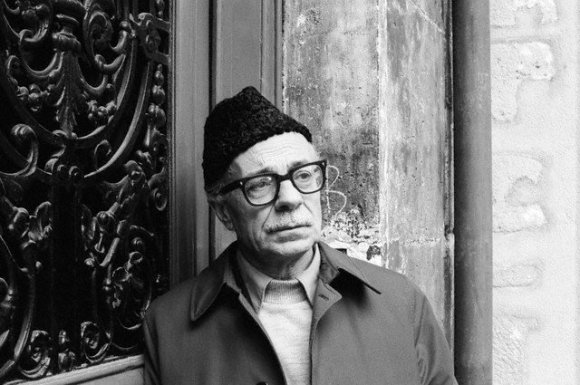
Ernesto Sabato - photo © Sophie Bassouls:Sygma:Corbis (via biblioteca ignoria)
I first heard of Ernesto Sabato on Gavdos island. I went to that earthly paradise for a ten day break some years ago and I left on a brilliant day almost two months later. There, in the community of free-campistas I dwelt in silence and in beautiful conversations that kept the same gentle rhythm of rising and passing away, as the sea, the days and the season’s imprints on nature at that dear beach that was our home. While there, we used to call that place the Epicurean Garden.
Just yesterday I found this interview Sabato gave at the ‘Unesco Courier‘ journal for the August 1990 issue. I have highlighted so many phrases in my personal copy, so I thought of sharing some here as quotes but to also include the entire interview at the bottom:
“Is Don Quixote “unreal”? If reality bears any relationship to durability, then this character born of Cervantes’ imagination is much more real than the objects that surround us, for he is immortal.”
“Art can no more progress than a dream can, and for the same reasons.”
“I must be a reactionary because I still believe in dull, mediocre democracy, the only regime which, after all, allows me to think freely and to prepare the way for a better reality.”
The Unesco Courier, cover, August 1990 issue
Ernesto Sabato’s full interview at the Unesco Courier
“The places in which any significant event occurred become embedded with some of that emotion, and so to recover the memory of the place is to recover the emotion, and sometimes to revisit the place uncovers the emotion. Every love has its landscape.”
Rebecca Solnit in ‘A Field Guide to Getting Lost’
Rebecca Solnit Quote
“To paraphrase several sages: Nobody can think and hit someone at the same time.”
Susan Sontag in ‘Regarding the Pain of Others’
Susan Sontag Quote
TED 2008 Talk by Benjamin Zander on Music and Passion
TED is one of my favourite platforms / sites out there. I always try to be updated with its events and event uploads and most of the times I am amazed by the people, ideas and material there is! Creative minds from all sorts of walks of life and fields communicate their creative thinking, they get attention and hopefully further their funding options, while we get to have “shining eyes” out of excitement and wonder. TED has become super trendy and popular these days, but there are older talks that might get ‘lost’ on TED’s always expanding video bank. So I thought of sharing today a talk I love from Benjamin Zander, an orchestra conductor, that gave a presentatiom at TED 2008, on music and passion.
Zander uses this talk to communicate his sense of fulfillment when he shares his love of classical music and of empowering people.
At some point during his talk he says:
‘The conductor of an orchestra doesn’t make a sound, he depends of his power on his ability to make other people powerful…. I realised that my job is to awaken possibility to other people”
You know if you are doing it “if other people’s eyes are shining.”
Because the question is, “Who am I being that my players’ eyes are not shining?”
A fun and beautiful talk. Enjoy it!
Beloved, at this moment let mind, knowing, breath, form, BE INCLUDED.
in ‘Zen Flesh Zen Bones: A Collection of Zen and Pre-Zen Writings’
Zen Quote
People are always talking of originality but what does that mean? As soon as we are born the world begins to act on us and this goes on to the end. And, after all, what we call our own, except energy, strength and will?
Goethe
 escape from a bankrupt state