I imagine that yes is the only living thing.
e. e. cummings
escape from a bankrupt state
Collecting, sharing and pointing to material that makes me click.
Author Archives: Daria Koskorou - Escape from a Bankrupt State
Talking about art and devotion

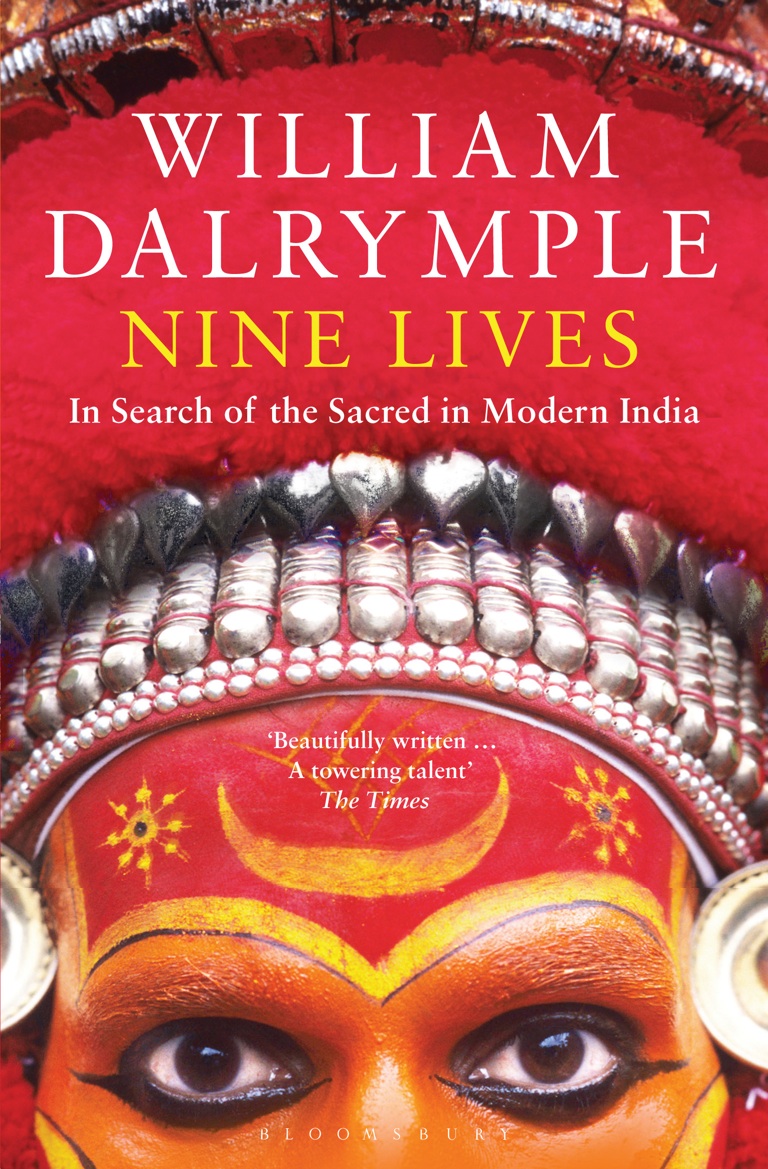
Last year I travelled to India. I hadn’t planned or dreamed about this trip much, so just as I was on my way there I took some books with me that would hopefully help me make sense of the place. One of those books, apart from being informative, I thought it was also a very delicate and appreciative survey of the fabric(s) that make up this deeply devotional society. The book is titled “Nine Lives: In Search of the Sacred in Modern India” by William Dalrymple. Dalrymple is a British (Scotish) travel writer, historian who lives in and obviously loves India. This book is a collection of stories that portray the different religious and spiritual traditions that are active in today’s India. Each story concentrates on specific people and their traditions. His observations and remarks assist you in connecting the dots between what you may see in your travel with the traditions or rituals these manifestations refer to. Of course India is a different experience to different people, but I loved his storytelling style and I felt that it really helped me understand the various heritage inputs that inform the people’s modern life. In India you cannot help it but feel that you are in a place where nothing ceases to exist, while at the same time new approaches are always welcome. Age long regional traditions and norms function hand in hand with modern style interconnectedness, old kingdoms are proud members of the relatively new Republic of India, meditation practices support civil servants’ performance, excellent train services transport people of all ages and castes to far away religious festivals, traffic chaos is met with a grin on drivers’ faces. In that sense spirituality there is almost tangible.
Anyway,when I returned from India, completely blown away from the experience of this country, I selected parts from a story in this book, titled ‘The Maker of Idols’, to share with my Digital Photography class at the Aegean Center. Here are these excerpts in the order I read them out:
In the sculpture of Cholas, and those like Srikanda [sculptor] who have kept its flame alive in the Kaveri Delta ever since …[m]ore than in any other Indian artistic tradition, the gods here are both intensely physical and physically gorgeous. The sensuality of a god was understood as an aspect of his formless perfection and divine inner beauty.
Here the final climax of worship is still to have darshan*: to actually see the beauty of the divine image, and to meet the eyes of the god.
‘We believe that unless these proportions are exactly perfect, the god cannot live in the idol. As sculptors, we struggle to become master craftsmen just so that we can begin to convey the beauty of the deity’… [says Srikanda]
‘Our workshop should be like a temple’, Srikanda said. ‘Every second is holy. Some people think that what we do is an art, but we think of it mainly as an act of devotion. For us art and religion are one: only when there is prayer can the artist make a perfect sculpture.’
‘The idols are reflections of our minds and spirits, so while we are at work on a sculpture we must behave as if we were in a holy temple: we must speak only the truth, and be kind and polite to everyone.’ [says Srikanda]
If the idol was not properly tended to, the jivan* could ebb much earlier, and if stolen or abused, the deity would leave immediately. ‘Such was the case with all the idols in the museums, none of which was now alive.’ [says Srikanda]
‘The god or godess only fully enters a new idol when we open his eyes and carve in the pupils – the final piece of carving – and when the appropriate puja* is performed. This is the most important and most intense moment. I am human: hard as I try, many times when I am carving I think of sales tax, family problems, getting the car repaired. But when the eyes are opened, and the appropriate mantras are chanted, I forget everything. I am lost to the world.’ [says Srikanda]
Glossary:
Darshan: a sighting, a glimpse, or view, especially of an idol of a deity in a temple, or of a holy or eminent personage.
Jivan: life, spirit.
Puja: a religious devotion (‘lit. adoration’).
Author’s italics, my emphasis (bold)
Excerpts and glossary from the book: Nine Lives, In Search of the Sacred in Modern India, by William Dalrymple, Bloomsbury, 2010, ISBN: 9781408801246

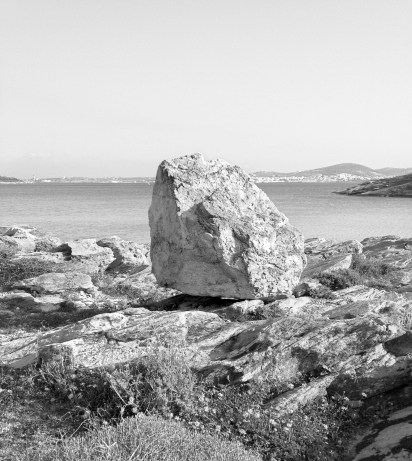
After I finished reading these excerpts in class my teacher, John Pack, told me that this is what he wants to see in my images and work. I have really only felt like that for one image so far, the rock, where I felt that everything is in its place in completeness, allowing me to frame it and process it as an image; for a fine rendering is an act of devotion. I am still not happy with my test print. I will keep on working on the image till it matches what I felt I saw. In other words, this image as a photograph is still in the temple.
Paco de Lucia’s amazing interpretation of the Concierto de Aranjuez
Paco de Lucia, this amazing Spanish flamenco guitarist plays the Concierto de Aranjuez by Joaquin Rodrigo, another spaniard. De Lucia cannot read music, so he interprets this piece following his unique sense of rhythm. Apparently Rodrigo thought that this was the best interpretation of his work.
This video (via youtube) includes all three movements, but my favorite ones are the second and third and they begin at 6:20mins into the video.
stormy sunset

This is a view from the San Stefanos beach off Avliotes village in north Corfu. I think it was June when I was there three years ago. At the far end you can see the island of Othoni, one of the most precious pieces of land I have ever visited. Storm has just passed the island heading our way revealing a beautiful and dramatic blue tinted sunset.
Nietzsche Quote
Perhaps the entire evolution of the spirit is a question of the body… In the long run, it is not a question of man at all: he is to be overcome
F. Nietzsche, The Will to Power
Martha Graham Quote
There is a vitality, a life force, an energy, a quickening, that is translated through you into action, and because there is only one of you in all time, this expression is unique.
And if you block it, it will never exist through any other medium and will be lost.
Martha Graham
Stephen Nachmanovitch Quote
And to do art only for the high feeling of completion and connectedness in the moment of inspiration would be like making love only for the moment of orgasm.
Stephen Nachmanovitch, “Free Play: Improvising in Life and Art”
Richard Feynman – No Ordinary Genius (full version BBC doc)
This is a BBC Horizon documentary on Richard Feynman, this beautiful man full of curiosity. I love how in pictures of him shown on this doc he looks younger as he grows older.
Horizon: Richard Feynman – No Ordinary Genius (full version) (via YouTube).
Jorge Luis Borges, The mirror – documentary on Vimeo
A documentary on Borges. At the very beginning it sounds a bit too “proud” for the man about to portray, but very quickly it becomes interesting, informative and engaging.
Here is a Borges quote from an interview of him featured in this doc:
“Reality is a combination of perceptions, emotions, feelings, distractions, dreams and surprises. That is reality”
Let’s start blogging with some Dante Alighieri
The soul, which is created quick to love,
responds to everything that pleases, just
as soon as beauty wakens it to act.Your apprehension draws an image from
a real object and expands upon
that object until soul has turned toward it;and if, so turned, the soul tends steadfastly,
then that propensity is love—it’s nature
that joins the soul in you, anew, through beauty.
Dante, Divina Comedia, Purgatorio, Canto 18, verses 19 – 27
 escape from a bankrupt state